Back to Resources
How Churches Can Use AI for SEO: 3 Practical Strategies to Reach More People Online
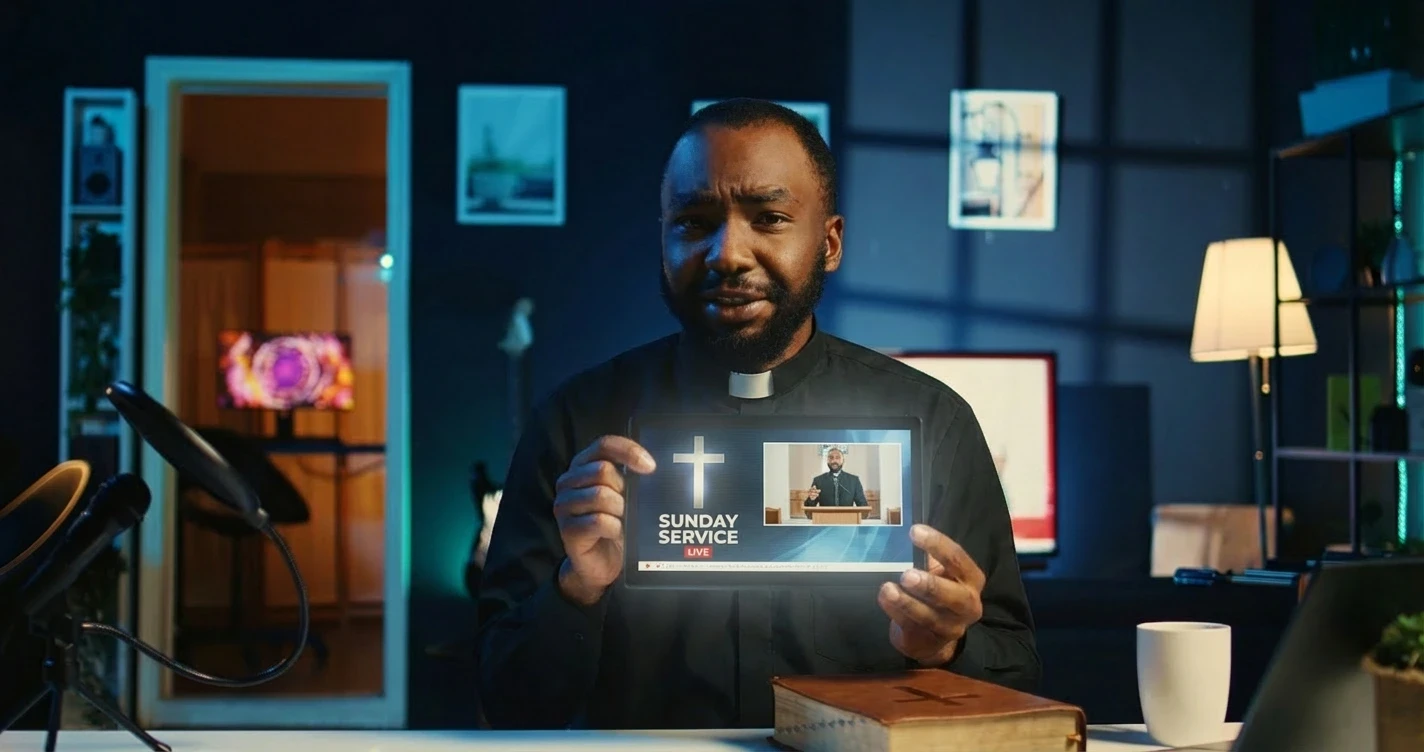
Last Tuesday at 2:47 AM, someone in your city searched "Can God forgive me?" At 6:15 AM, a young parent typed "Christian parenting advice anxiety." By lunchtime, someone else searched "how to know if Christianity is real."
Every single day, people wrestling with their deepest spiritual questions reach out into the digital space looking for answers. Most of them will never find your church, not because you don't have answers, but because when they search, you're simply not showing up.
I know what you might be thinking: "Our church doesn't need to play the SEO game." But think about this: SEO isn't about gaming a system. It's about being findable when God brings someone to a searching moment.
The good news? You don't need a marketing degree or a massive budget. AI has fundamentally changed everything. What used to require expensive consultants can now be done by any pastor willing to invest just 30 minutes a week.
What is Church SEO and Why Does It Matter?
Church SEO (Search Engine Optimization) is the practice of making your church's online content discoverable when people search for spiritual answers, church services, or faith-related questions. When someone in your community searches "churches with youth programs near me" or "how to deal with grief as a Christian," SEO determines whether they find your church or not.
Why This Matters Now: With 60% of Google searches resulting in zero clicks in 2024, users are getting answers directly from search results. This means your content needs to be the answer Google displays, not just a link people might click.
The Mars Hill Principle: Biblical Grounding for Digital Ministry
Some pastors worry that SEO feels worldly or compromising. Let's address this head-on with Scripture.
In Acts 17, Paul doesn't wait for Athenians to wander into the synagogue. He goes to Mars Hill—the center of their philosophical discourse—and engages them on their turf. He contextualizes the gospel without compromising it. He meets them where they are.
That's exactly what strategic SEO does. When someone searches "how to find hope in hard times," they're in the digital marketplace. When they type "is Christianity true," they're standing on the modern Mars Hill.
SEO isn't manipulation. It's hospitality. It's making sure that when someone knocks on your church's digital door, they can actually find the doorknob.
Three AI-Driven SEO Strategies That Actually Work
Strategy 1: Answer-Driven Content Creation
The most effective church content starts with one question: "What are people actually asking?"—not "What do we want to say?"
The 3-Step Quick-Start:
Step 1: Discover the Questions
Ask ChatGPT: "What are common questions people search about prayer?"
It might generate:
"How do I start praying if I've never prayed before?"
"What do I do when God doesn't answer?"
"How to pray for someone who's sick"
These aren't abstract topics—they're real questions from spiritually hungry people.
Step 2: Create Content That Serves
Choose one question and write a pastoral, biblical response. For "feeling distant from God," you might create:
Title: "Feeling Distant from God? 5 Biblical Truths to Remember"
Include:
Compassionate opening that acknowledges spiritual dryness
Biblical examples (Psalm 42, Jesus in Gethsemane)
Practical next steps
Clear invitation to connect with your church
Step 3: Scale With AI
Ask AI: "Suggest five related blog posts for someone on a similar spiritual journey."
Suddenly you're not creating random content—you're building a discipleship pathway.
Strategy 2: The Sermon-to-SEO Pipeline
You already spend hours preparing sermons. What if that work could reach thousands beyond Sunday morning?
The Process:
Sunday: Preach your sermon
Monday (15 minutes): Upload audio to Otter.ai for transcription
Monday (15 more minutes): Ask ChatGPT: "I'm a pastor. This is my sermon transcript on [topic]. Create: (1) a 1,000-word blog post, (2) three social media posts, (3) five small group discussion questions. Maintain my pastoral voice and biblical grounding."
Result: One sermon becomes:
A searchable blog post reaching new people
Social content for the week
Small group material
Future pastoral care resources
Real Results: A mid-sized Ohio church implemented this exact process. In six months:
Traffic grew from 200 to 1,800 monthly visitors
47 first-time visitor inquiries came through their website
12 people joined small groups before ever attending Sunday service
The lead pastor's favorite outcome? A woman who read their blog posts for weeks before visiting said, "I already know your heart. I've been learning from you."
Strategy 3: Local SEO for Community Connection
When someone searches "churches near me" or "family-friendly church in [your city]," they're not just looking for information—they're looking for belonging. These searches happen in vulnerable moments: after a move, during crisis, when someone's ready to walk through church doors again.
Your 30-Minute Local SEO Setup:
Claim your Google Business Profile
Fill out every section: hours, service times, photos, description
Post weekly updates
Ask AI to draft: "Create a welcoming Google Business post (150 characters) about this Sunday's sermon on [topic]."
Create location-specific content (15 min monthly)
Write about how your church serves your community:
"5 Ways [Church Name] Serves [Your City] Schools"
"New to [Your City]? Finding Community at [Church Name]"
"[Your City] Food Banks: How You Can Help"
This demonstrates genuine community investment beyond Sunday services.
Getting Started This Week
Week 1: Foundation
Set up Google Business Profile
Create ChatGPT and Otter.ai accounts
Audit your website: What content exists? What's missing?
Week 2: First Content
Research one question people search about your next sermon topic
Write one blog post answering it
Publish with a clear call-to-action
Week 3: Sermon Repurposing
Transcribe your most recent sermon
Use AI to create blog post and social content
Review and publish
Ongoing: The 30-Minute Weekly Rhythm
Every Monday:
Upload sermon and generate transcript (10 min)
AI-assisted blog post creation (15 min)
Schedule social posts and Google update (5 min)
That's it. Thirty minutes weekly for an exponentially increased digital presence.
Free Tools to Start Today:
ChatGPT or Claude (content creation)
Otter.ai (transcription)
Google Business Profile (local SEO)
AnswerThePublic (discover what people search)
Addressing Common Concerns
"Isn't this manipulative?"
If your motive is ego or competition, yes. But if your motive is genuine care for people genuinely searching for spiritual answers, then SEO is compassionate outreach. Jesus used parables that met people where they were. Paul quoted Greek poets. SEO is simply digital contextualization.
"What about theological integrity?"
You're still the pastor. AI is a tool, not a theologian. Review everything. Think of AI like a ministry intern, helpful, but needs supervision.
"We're too small / not tech-savvy"
If you can send an email, you can do this. AI tools are conversational. Simply type: "Help me write a blog post about prayer." Done.
Plus, you likely have tech-savvy members who'd love to help. Small churches often have an advantage here: authenticity and personal touch. SEO just makes you discoverable.
In Summary: Be Findable
Somewhere in your city right now, someone is googling "does God still love me after what I've done?" They're searching in shame, in darkness, in desperate hope.
What will they find? A post from your church that says, "Yes, absolutely yes"? Or condemnation, confusion, or nothing?
SEO isn't about algorithms. It's about being present in people's searching moments. It's digital hospitality, unlocking your church's wisdom so when someone knocks, they can get in.
The content you create this week might serve someone a year from now. That blog post about grief? It'll be there at 2 AM when a widow can't sleep. Your sermon on doubt? It might be the lifeline for someone whose faith is hanging by a thread.
You're not just creating content. You're building a library of hope.
Your Next Step
This week, not someday, this week, create one piece of content answering one real question someone in your community is searching for. Just one. Use AI to help. Publish it.
The harvest is plentiful. The laborers are few. But now, through AI-powered SEO, your voice can reach further than ever.
Start today. Your community is searching. Be findable.
👉 Book a free consultation today to start getting found .
We help churches put this into practice through our digital ministry service. If your church still needs a site, we also offer a free church website.